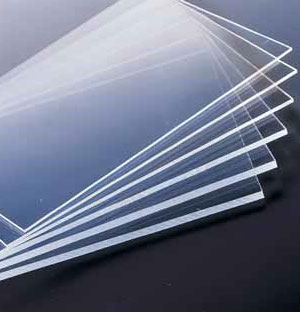
 Polycarbonate is a unique engineering thermoplastic which has an excellent balance of clarity and toughness while displaying a wide range of high-heat
deflection temperatures. Toughness is the most outstanding feature of polycarbonate; for applications such as safety shields and sports equipment this
durable material is without equal. Other characteristics include excellent electrical properties, dimensional stability and inherent ignition resistant
properties.
Polycarbonate is a unique engineering thermoplastic which has an excellent balance of clarity and toughness while displaying a wide range of high-heat
deflection temperatures. Toughness is the most outstanding feature of polycarbonate; for applications such as safety shields and sports equipment this
durable material is without equal. Other characteristics include excellent electrical properties, dimensional stability and inherent ignition resistant
properties.
The close tolerance machinability and transparency of this material make it appropriate for applications which require high performance characteristics.
This combination of physical properties make it a useful material for the automotive, industrial/business machine and appliance markets. Polycarbonate is
available in both general purpose and FDA grades. General purpose polycarbonate is enhanced by the addition of thermal stabilizers, U.V. stabilizers, mold
release agents, glass fibers and ignition resistant additives. Fabrication techniques such as milling, forming or cutting can be performed using standard
equipment and tools.
|
Features:
- Exceptional machinability
- Superior dimensional stability
- Low water absorption
- Very good impact resistance – almost unbreakable
- Good thermal properties
- Lightweight – half the weight of glass
- Heat resistant
- Transparent up to 2"thick in special grades
|
Applications:
- Doors
- Equipment enclosures
- Greenhouses
- High voltage switches
- High Temp windows
- Instrument gauge covers
- Lenses/Sight glasses
- Light shields
- Machine guards
|
- Photo-lens covers
- Safety guards
- Safety shields
- Signage
- Solar rods
- Thermal insulation
- Thermometer housing
- Window Glazing
- Patio Roofs
|
|
 TUFFAK® polycarbonate sheet is the basic grade of high-impact polycarbonate plastic sheet. Virtually unbreakable,TUFFAK® sheet is 300-times stronger
than single-strength glass, and significantly tougher than other transparent sheet materials of equal thickness. TUFFAK® polycarbonate sheet is available
in a variety of specialty formulated grades, for an in depth look at the TUFFAK® line, click the link below.
TUFFAK® polycarbonate sheet is the basic grade of high-impact polycarbonate plastic sheet. Virtually unbreakable,TUFFAK® sheet is 300-times stronger
than single-strength glass, and significantly tougher than other transparent sheet materials of equal thickness. TUFFAK® polycarbonate sheet is available
in a variety of specialty formulated grades, for an in depth look at the TUFFAK® line, click the link below.
|
 PALSUN presents the transparency of glass at less than half the weight, combined with unmatched strength. PALSUN can be cold bent, fabricated
and formed, making it ideal for applications such as barrel vault roofing, skylights, architectural roofing and glazing. Clear, translucent or
opaque, PALSUN sheets are also ideal as machine guards, sound barriers and safety glazing.
PALSUN presents the transparency of glass at less than half the weight, combined with unmatched strength. PALSUN can be cold bent, fabricated
and formed, making it ideal for applications such as barrel vault roofing, skylights, architectural roofing and glazing. Clear, translucent or
opaque, PALSUN sheets are also ideal as machine guards, sound barriers and safety glazing.
 PALSUN® (Polycarbonate Sheets) Typical Properties PALSUN® (Polycarbonate Sheets) Typical Properties
PALSUN® (Polycarbonate Sheets) MSDS
|
 Zelux® polycarbonate is an engineering plastic with excellent dimensional stability and good strength and stiffness over a wide range of service
temperatures. Zelux is often used for structural applications when clarity and impact strength are essential including lenses, manifolds, site
glasses, and machine guards.
Zelux® polycarbonate is an engineering plastic with excellent dimensional stability and good strength and stiffness over a wide range of service
temperatures. Zelux is often used for structural applications when clarity and impact strength are essential including lenses, manifolds, site
glasses, and machine guards.
ZELUX® (Polycarbonate Slabs) Typical Properties
ZELUX® (Polycarbonate Slabs) MSDS
|
 Machine grade polycarbonate (PC) is a transparent amorphous thermoplastic which offers very high impact strength and high modulus of elasticity.
The material has a 290°F (145°C) heat deflection temperature at 264 psi, absorbs very little moisture and resists acidic solutions. These properties,
in addition to good electrical characteristics, make machine grade polycarbonate stock shapes an excellent choice for electrical/electronic applications.
Machine grade polycarbonate (PC) is a transparent amorphous thermoplastic which offers very high impact strength and high modulus of elasticity.
The material has a 290°F (145°C) heat deflection temperature at 264 psi, absorbs very little moisture and resists acidic solutions. These properties,
in addition to good electrical characteristics, make machine grade polycarbonate stock shapes an excellent choice for electrical/electronic applications.
Polycarbonate Rod (Solid Rounds) Typical Properties
Polycarbonate Rod (Solid Rounds) MSDS
|
 For the clarity of glass and the impact resistance, specify Excelon™ PC tubing. Excelon PC provides extraordinary design and fabrication
opportunities. Specific formulations are available for tints and colors with performance additives for ultraviolet stabilization, flame
retardant (94VO) and radiation resistance.
For the clarity of glass and the impact resistance, specify Excelon™ PC tubing. Excelon PC provides extraordinary design and fabrication
opportunities. Specific formulations are available for tints and colors with performance additives for ultraviolet stabilization, flame
retardant (94VO) and radiation resistance.
EXCELON™ PC Tubing (Hollow Rounds) MSDS
|
|